

Einstein Hospital Cyberattack: What Patient Data Was Accessed and How to Stay Safe
A cyberattack targeting Einstein Hospital Israelita, one of Brazil’s leading hospitals, has raised concerns about the security of sensitive medical information. The hospital confirmed that attackers gained unauthorized […]
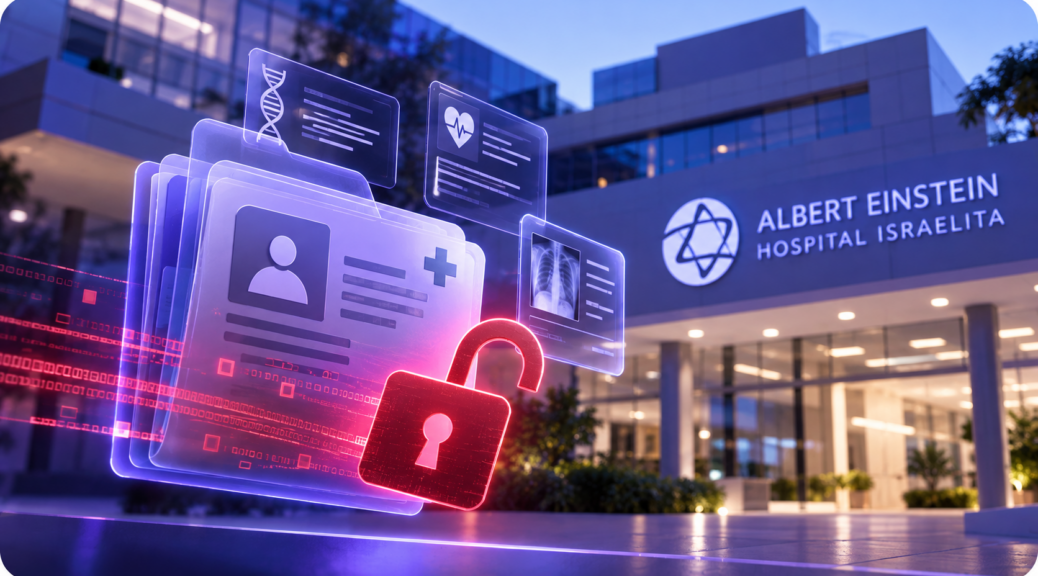
A cyberattack targeting Einstein Hospital Israelita, one of Brazil’s leading hospitals, has raised concerns about the security of sensitive medical information.
The hospital confirmed that attackers gained unauthorized access to and obtained part of its patient database.
Potentially affected information includes names, Brazilian taxpayer identification numbers (CPF), dates of birth, medical prescriptions and test results.
The hospital said it had found no evidence that the information had been publicly disclosed or misused. However, the incident raises an important question: what should patients do when their personal and medical information is accessed without authorization?
What happened at Einstein Hospital?
On October 8, 2026, the hospital publicly confirmed a cybersecurity incident involving patient information.
According to the institution, suspicious activity was identified on August 4, prompting technical and operational measures to investigate and contain the incident.
As reported by InfoMoney, republishing reporting from O Globo, unauthorized individuals obtained information from part of the hospital’s databases.
The hospital stated that medical services and electronic health record systems continued operating normally.
Brazil’s National Data Protection Authority (ANPD) was notified, and the case was referred to the Federal Police.
An investigation involving independent cybersecurity experts remains ongoing.
What patient information may have been accessed?
The affected databases may contain:
- Full names;
- CPF numbers, Brazil’s individual taxpayer identifiers;
- Dates of birth;
- Medical prescriptions;
- Laboratory test results;
- Other medical information included in the affected records.
This does not mean every patient had all these details exposed.
The hospital is still determining exactly which information was accessed and how many people were affected.
Some of the affected material consists of fragmented documents, including records that may not directly identify individual patients.
Why is medical data valuable to cybercriminals?
Health information is particularly sensitive because it can reveal personal details people would not normally share publicly.
When combined with identifying information, medical records may help criminals create convincing scams.
Imagine receiving a message from someone claiming to represent a hospital. They know your name and mention a medical test or appointment.
Those details may make the message appear trustworthy, even when the sender is an impersonator.
Cybercriminals can potentially exploit this information through phishing, identity theft and fraudulent payment requests.
As explained in the PSafe article Have You Already Been the Victim of a Data Leak?, stolen personal information can create risks long after the original security incident.
Does a cyberattack mean patient data was leaked publicly?
Not necessarily.
There is an important distinction between unauthorized access, data theft, public disclosure and misuse.
In this case, Einstein Hospital confirmed unauthorized access to and acquisition of patient data but reported no evidence of public disclosure or improper use at the time of its announcement.
That does not mean affected patients should ignore the situation.
Even without evidence of immediate misuse, exposed personal information can create future security risks.
This is why monitoring official communications and recognizing suspicious messages are important precautions.
How can patients find out if they were affected?
The hospital said it is contacting affected patients individually by email.
Anyone who has received medical services from the institution should pay attention to official notifications.
However, an email claiming to come from the hospital is not automatically legitimate.
Scammers may exploit widely reported cyberattacks to distribute fake notifications, malicious links and phishing messages.
If you receive a suspicious email, avoid clicking its links. Instead, visit the hospital’s official website independently or contact the institution using a trusted number.
What should you do to protect your information?
Even if you have not received a notification, a few practical steps can help reduce your exposure to fraud.
1. Be cautious with unexpected medical messages
Be suspicious of unsolicited emails or text messages about medical test results, outstanding payments or urgent account verification.
Contact the hospital directly before providing information or making payments.
2. Never share passwords or verification codes
Legitimate security notifications should not require you to disclose account passwords or one-time authentication codes to an unknown person.
Be especially cautious when someone creates pressure to act immediately.
3. Strengthen your online accounts
Use strong, unique passwords for important accounts.
Enable two-factor authentication wherever possible, particularly for your primary email account.
Protecting your email is essential because it often serves as the recovery method for other online services.
4. Watch out for phishing links
A message containing accurate personal information is not necessarily authentic.
Scammers may use real names, dates or other details to make fraudulent communications more believable.
Always verify the website address before entering personal or financial information.
5. Monitor official updates
If you receive a legitimate notification about the incident, review the institution’s instructions carefully.
Keep copies of relevant communications and report suspicious activity through official channels.
What does this incident teach us about digital security?
The Einstein Hospital cyberattack demonstrates that sensitive information can face security risks even when stored by major, well-established institutions.
For individuals, the lesson is to remain cautious about unexpected communications, protect online accounts and verify requests involving personal information.
For organizations, the incident highlights the importance of cybersecurity monitoring, incident response and data protection.
Digital safety is not just about avoiding malware. It also means recognizing scams and protecting the personal information connected to everyday life.
Keep reading — PSafe
- Identity Theft: Survivor Stories
https://www.psafe.com/en/blog/identity-theft-survivor-stories/
- Malicious Links: What They Are and How to Protect Yourself
https://www.psafe.com/en/blog/malicious-links-what-they-are-and-how-to-protect-yourself/
- How to Prevent Identity Theft When You’re Online
https://www.psafe.com/en/blog/how-to-prevent-identity-theft-online/